










Take control of your energy costs
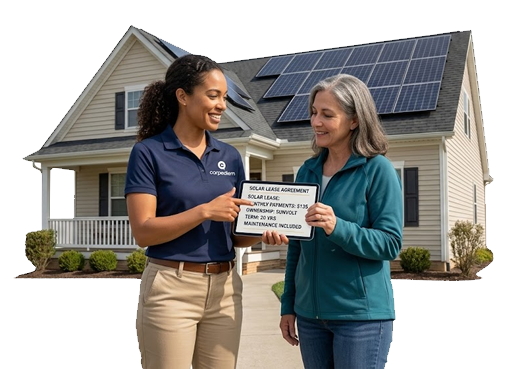
A solar lease allows an eligible homeowner to use a system designed for the property without purchasing the panels. Instead of financing ownership of the equipment, the homeowner makes the payment described in the lease agreement while the provider retains ownership of the system.
Carpediem helps coordinate the home assessment, electric-usage review, preliminary design, roof review and presentation of available options. Every proposal is prepared around the property, utility company, energy use and provider requirements.
A simpler way to consider solar energy
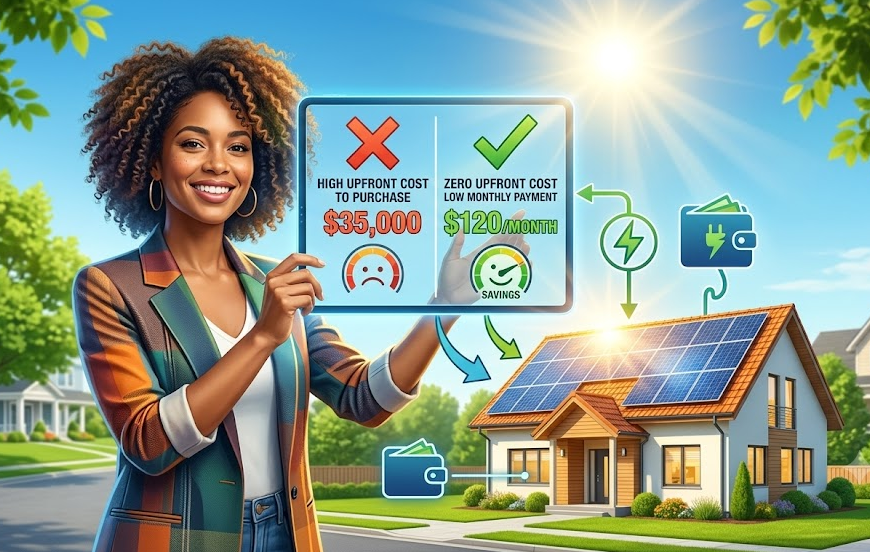
Available programs may combine low or $0 upfront cost, more predictable monthly payments and ongoing service. Exact benefits depend on the proposal and final agreement.
No system purchase
The provider owns the system during the lease term, so you do not need to purchase the panels to get started.
Designed for your home
System size and placement are evaluated using roof space, shade, historical usage and utility requirements.
Monitoring and maintenance
Programs may include monitoring, covered maintenance and production protections, depending on the provider and agreement.
More predictable costs
The proposal shows the payment, term, any escalator and production assumptions before you decide.
How the process works
From the initial assessment through activation, Carpediem coordinates each stage with the homeowner and participating providers.
Home assessment
We review the address, utility, home type, monthly energy use and the homeowner’s goals.
Roof review and design
We confirm visible roof conditions and prepare a preliminary design based on usable space and energy history.
Proposal and disclosures
You receive the estimated payment, term, production assumptions, coverage, transfer rules and other important conditions.
Permitting and installation
After approval, engineering, permits, installation, inspection and utility interconnection are coordinated.
Activation and monitoring
Once the system receives permission to operate, production begins and applicable monitoring is enabled.
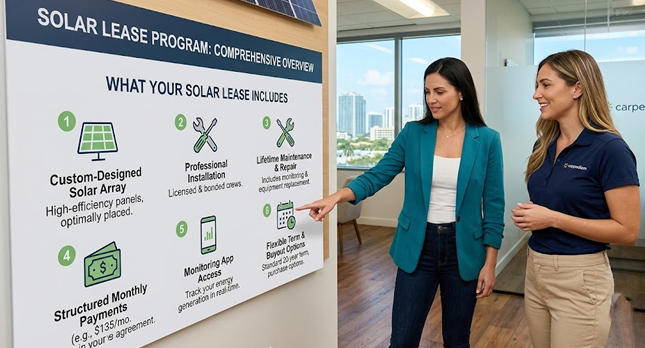
What a solar lease program may include
- Custom solar design for the property
- Permit, installation and interconnection coordination
- System-performance monitoring
- Covered maintenance as described in the agreement
- Production protection or guarantee when applicable
- Transfer or purchase options described in the contract
Understand your bill after going solar
A solar lease does not necessarily eliminate the utility bill. The homeowner normally remains connected to the grid and may still pay fixed utility charges, taxes, electricity used beyond solar production and other utility charges. Production and savings vary with weather, energy use, roof orientation, shade and utility rates.
Lease, loan or cash: what is the difference?
The right structure depends on your priorities. Review ownership, payments, maintenance, incentives and obligations before choosing.
| Feature | Solar Lease | Solar Loan | Cash Purchase |
|---|---|---|---|
| System owner | Third-party provider | Homeowner | Homeowner |
| Upfront cost | May be low or $0 | Depends on loan | Full purchase upfront |
| Maintenance | May be covered | Homeowner responsibility | Homeowner responsibility |
| System tax incentives | Generally belong to system owner | May belong to eligible homeowner | May belong to eligible homeowner |
| Payment structure | Monthly contract payment | Monthly debt payment | No monthly purchase payment |
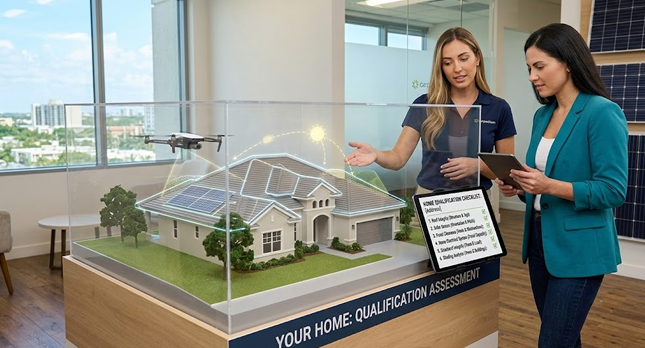
Could your home qualify?
Eligibility is determined after reviewing the property and program requirements. Common factors include:
Solar lease frequently asked questions
See whether solar leasing fits your home
Request a no-obligation assessment. We will review your electric bill, property and available options before presenting a proposal.
Important disclosure
Carpediem Improvements coordinates home-improvement solutions and may present solar programs offered by third-party providers. Availability, eligibility, system ownership, payments, escalators, terms, maintenance, warranties, insurance, production, transfer, purchase, cancellation and incentives vary. Review all disclosures and the final agreement before enrolling. A solar lease is not system ownership and does not guarantee savings or elimination of the utility bill.